

Key Takeaways
- NFTs offer emerging artists direct access to a global market without traditional gallery gatekeeping, with potential royalties of 8-10% on all future sales
- Platforms like OpenSea and Foundation provide different entry points for artists, with varying commission structures and audience demographics
- First-time NFT creators can expect upfront costs of $50-$300 in gas fees, with environmental concerns being addressed through eco-friendly blockchain alternatives
- Building a community through Twitter and Discord is crucial for NFT success, often more important than the artwork itself
- MyArtBroker provides resources to help navigate the complex intersection of traditional art markets and the emerging NFT landscape
The NFT art revolution isn’t just another tech trend—it’s fundamentally restructuring who gets to participate in the art market. For the first time in history, artists can bypass traditional gatekeepers and connect directly with collectors worldwide, all while maintaining unprecedented control over their work and earnings.
If you’ve been watching from the sidelines, wondering if NFTs could transform your artistic career, this comprehensive guide will equip you with the practical knowledge to enter the space confidently. The barriers to entry have never been lower, while the potential for creative and financial independence has never been higher.
How NFTs Are Changing the Game for Artists Without Gallery Connections
NFTs (Non-Fungible Tokens) have created an alternate universe where artists don’t need MFAs, gallery representation, or connections to the art world elite. This technological innovation has effectively removed the traditional gatekeepers who decided which artists deserved attention and market access. Through MyArtBroker, we’ve seen how this democratization has opened doors for countless creators previously excluded from traditional art market systems.
Breaking Down the Traditional Art Market Barriers
The conventional path for artists has historically been narrow and difficult to navigate: get noticed by the right people, secure gallery representation, build a collector base, and hope for institutional recognition. This system inherently favored those with connections, financial resources, or proximity to art world centers. NFTs demolish these barriers by providing a direct route to market for anyone with internet access and creative output. Unlike physical galleries that can only represent a limited roster, blockchain technology creates unlimited digital gallery space where artists control their presentation, pricing, and sales strategy.
Direct-to-Collector Sales Without Middlemen
One of the most revolutionary aspects of NFTs is the ability to sell directly to collectors without surrendering large percentages to intermediaries. Traditional galleries typically take 40-60% of an artwork’s sale price, while NFT marketplaces generally charge between 2.5-15%. This dramatic reduction in commission fees means artists retain significantly more value from their sales. For those interested in exploring different platforms for digital assets, here’s a comprehensive guide to a European crypto exchange.
Even more groundbreaking is the ability to program royalties into the smart contract of your NFT. Unlike the traditional art market, where artists receive nothing from secondary sales, NFT creators can automatically receive 8-10% of all future resales. This passive income stream fundamentally changes the financial trajectory for artists whose work appreciates over time.
Global Reach from Day One
The moment you mint your first NFT, it becomes accessible to collectors worldwide, 24/7. This global accessibility stands in stark contrast to the physical limitations of traditional gallery exhibitions. An emerging artist in a remote location who mints an NFT has exactly the same market reach as an established artist in a major art capital. This level playing field represents perhaps the most significant structural change in the art market in centuries.
Top 5 NFT Marketplaces for Artists Just Starting Out
Choosing the right platform for your NFT debut can significantly impact your success. Each marketplace has different fee structures, audience demographics, and barriers to entry. Your selection should align with your artistic goals, technical comfort level, and marketing strategy. For more insights, explore what NFTs mean for artists.
OpenSea: The Largest Platform With Lowest Entry Barriers
As the largest NFT marketplace by volume, OpenSea offers the widest potential audience for new artists. The platform allows anyone to create an account and begin minting NFTs without an invitation or application process. With a simple 2.5% fee on sales and the ability to lazy mint (creating listings without paying upfront gas fees), OpenSea presents the lowest financial barrier to entry. The tradeoff for this accessibility is increased competition—you’ll be one creator among millions vying for collector attention. For enhanced security in managing your NFTs, consider using a Trezor Model T hardware wallet.
Foundation: Curated Space That Values Quality Over Quantity
Foundation operates on an invitation-only model, requiring new artists to receive an invite from an existing creator on the platform. This curated approach results in a higher quality threshold and generally more serious collectors willing to pay premium prices. The platform charges a 15% commission on sales, significantly higher than OpenSea, but many artists find the more selective environment leads to better visibility and higher average sale prices.
Rarible: Community-Owned Platform With Creator-Friendly Features
Rarible distinguishes itself through its community governance model using the RARI token, which gives users voting rights on platform decisions. This creates stronger alignment between creator and platform interests compared to corporate-owned marketplaces. The platform offers flexible royalty settings (typically between 5-30%) and supports multiple blockchains including Ethereum, Flow, and Tezos, giving artists more options for managing gas fees and environmental impact. For more insights on how NFTs are impacting the art world, check out the true value of NFTs in the art world.
One of Rarible’s standout features is its collections tool, which makes it easy for artists to create cohesive series with shared branding and attributes. This is particularly valuable for storytelling and building collector loyalty across multiple pieces.
SuperRare: Higher-End Platform for Premium Digital Art
SuperRare positions itself as the high-end gallery of the NFT world, with a rigorous application process and highly selective curation. Artists must submit portfolios for review, with acceptance rates rumored to be below 1%. This exclusivity creates a premium environment where average sale prices significantly exceed those on more open platforms.
The platform takes a substantial 15% commission on primary sales plus 3% on secondary sales, but offers enhanced visibility through featured collections and editorial coverage. For artists with established digital portfolios looking to position their work at the higher end of the market, SuperRare’s exclusivity can be worth the steeper fees and difficult acceptance process.
Nifty Gateway: Mainstream Appeal With Credit Card Payment Options
Owned by cryptocurrency exchange Gemini, Nifty Gateway stands out by allowing collectors to purchase NFTs with credit cards rather than requiring cryptocurrency. This significantly lowers the barrier to entry for traditional art collectors who might be crypto-curious but not yet wallet-savvy.
The platform specializes in curated “drops”—limited-time releases that create scarcity and urgency. While getting selected for a drop requires platform approval, the concentrated marketing attention can help emerging artists gain rapid visibility. For creators interested in attracting collectors from the traditional art world who are just beginning to explore NFTs, Nifty Gateway’s mainstream-friendly approach offers a valuable entry point.
“The NFT marketplace, along with the rise of the metaverse, have allowed emerging digital artists to bypass the gatekeeping of traditional galleries or auction houses and establish themselves on the market. While some platforms take an artist commission — NFT art marketplace SuperRare, for example, deducts 15% for royalties — this is still lower than most bricks-and-mortar galleries.”
Real Numbers: What Emerging Artists Actually Earn From NFTs
The headlines about multi-million dollar NFT sales create unrealistic expectations for most emerging artists. Understanding the actual economics of the NFT market can help you set achievable goals and develop sustainable strategies. The reality is more nuanced than the sensational stories suggest, but still offers significant potential for artists willing to invest time in building their presence.
Average First Sale Prices for New Artists
For most artists entering the NFT space without an existing collector base, first sales typically range from 0.01-0.2 ETH (approximately $20-$400 at current rates). This initial price point allows new collectors to take a chance on undiscovered talent without significant financial risk. Rather than focusing on high prices for your debut, consider how accessible pricing can help you build a collector base that will support your future work. According to marketplace data, artists who start with lower-priced editions often build more sustainable careers than those who price themselves out of the market initially.
Royalty Percentages That Keep Paying You
The revolutionary aspect of NFTs isn’t necessarily the primary sale, but the ongoing royalties from secondary sales. While traditional artists receive nothing when their work resells at auction, NFT smart contracts automatically direct a percentage of each resale to the original creator. Most artists set royalties between 5-10%, with 7.5% emerging as the industry standard that balances artist compensation with collector liquidity.
Over time, these royalties can eclipse the value of primary sales for successful artists. A piece that initially sells for 0.1 ETH but changes hands multiple times can generate significant passive income, especially if its value appreciates. This royalty structure fundamentally changes the economics of an artistic career, creating long-term financial sustainability that was previously unavailable to most creators. For artists interested in leveraging their crypto earnings, platforms like SALT Lending offer innovative ways to manage and grow their digital assets.
Gas Fees and Hidden Costs to Budget For
| Marketplace | Initial Setup Cost | Minting Fee (per NFT) | Commission on Sales |
|---|---|---|---|
| OpenSea | $50-100 (one-time) | Free (lazy minting) | 2.5% |
| Foundation | $50-100 (one-time) | $30-150 per NFT | 15% |
| SuperRare | Application only | $30-150 per NFT | 15% + 3% secondary |
| Rarible | $50-100 (one-time) | Free (lazy minting) | 2.5% |
The most significant upfront cost for new NFT artists is gas fees—the computational charges for blockchain transactions. These fees fluctuate based on network congestion and can range from $20 to over $200 per transaction. First-time creators should budget $50-300 for their initial wallet setup and first minting experience. Understanding that these are business startup costs rather than ongoing expenses can help frame the investment properly.
Beyond gas fees, factor in costs for promotional activities, collaboration opportunities, and community building. Many successful NFT artists reinvest 20-30% of their earnings into collecting other artists’ work, which strengthens community connections and often leads to more visibility within the ecosystem. This “collect-to-connect” strategy has proven more effective than traditional advertising for many emerging artists.
Remember that income from NFT sales is taxable in most jurisdictions and should be reported accordingly. Setting aside 25-30% of proceeds for potential tax obligations is prudent financial management that many new creators overlook in their initial excitement.
Step-by-Step: Creating Your First NFT Collection
Rather than minting individual pieces, consider developing a cohesive collection that tells a unified story. Collections give collectors multiple entry points at different price levels and create a stronger narrative around your work.
Developing a Cohesive Artistic Vision
Successful NFT collections balance artistic integrity with market awareness. Begin by identifying themes and visual motifs that represent your unique perspective while resonating with potential collectors. Consider how your work fits into existing NFT subcommunities—generative art, photography, abstract, narrative, or social commentary each have distinct collector bases with different expectations. Rather than trying to appeal to everyone, focus on creating authentic work that will deeply connect with a specific audience segment. The most financially successful collections typically contain 5-20 pieces that share visual elements while each maintaining their individual appeal.
Technical Requirements for Different Marketplaces
Each NFT marketplace has specific technical requirements that impact how your work will be displayed and experienced. For image-based work, prepare high-resolution files (at least 3000px on the longest side) in PNG format with embedded metadata. Video NFTs should typically be kept under 100MB with H.264 compression for optimal marketplace compatibility. Advanced interactive NFTs may require JavaScript knowledge and custom hosting solutions. No matter which format you choose, always maintain master files at the highest possible quality—marketplace compression can’t be reversed, but you can always scale down from high-quality originals.
Setting Up Your Crypto Wallet Securely
“On the blockchain, buyers and artists can transact directly and fees are upfront. As standard, all Ethereum sales have a gas fee to cover the computer power needed for the transaction, while artist’s fees can be found in the NFT’s smart contract.”
Your crypto wallet is both your digital identity and financial infrastructure in the NFT space. MetaMask remains the most widely-accepted wallet across marketplaces, though alternatives like Rainbow and Coinbase Wallet offer different feature sets. When setting up your wallet, the seed phrase (12-24 random words) is your absolute lifeline—without it, all assets could be permanently lost.
Store your seed phrase in multiple physical locations, never digitally. Consider using a fireproof safe or safety deposit box for at least one copy. Even a small investment in security is justified considering the potential value your wallet may eventually hold. Never share your seed phrase with anyone, even if they claim to represent a marketplace or support team.
For additional security, consider using a hardware wallet like Ledger or Trezor for long-term storage once your NFT career generates significant income. These physical devices keep your private keys offline, dramatically reducing the risk of hacking or phishing attacks that plague software wallets.
Pricing Strategies That Work for New Artists
Price discovery is one of the most challenging aspects of entering the NFT market. Starting too high restricts your potential collector base, while pricing too low may signal lack of confidence or quality. Most successful emerging artists begin with accessible entry points—typically 0.05-0.1 ETH for their first drops—and gradually increase prices as their collector base grows. This strategy prioritizes community building over immediate profit, which typically yields better long-term results.
Consider implementing a tiered pricing structure within your collection. Lead with several more accessible pieces to attract new collectors, then include a few higher-priced “grail” pieces that allow for deeper collector commitment. This approach gives supporters at different financial levels ways to participate in your success while creating natural price discovery mechanisms within your own ecosystem.
Minting Process Without the Technical Headaches
The actual minting process has become increasingly user-friendly as marketplaces compete for creator attention. On platforms like OpenSea and Rarible, the process is similar to uploading content to any social media platform—select your file, add metadata like title and description, set royalty percentages, and confirm the transaction. Lazy minting options, which defer gas fees until the moment of sale, have dramatically reduced the financial barrier to creating your first NFTs. This allows you to list multiple works without significant upfront investment, though buyers will still need to pay gas fees upon purchase.
Building Your NFT Art Community From Zero
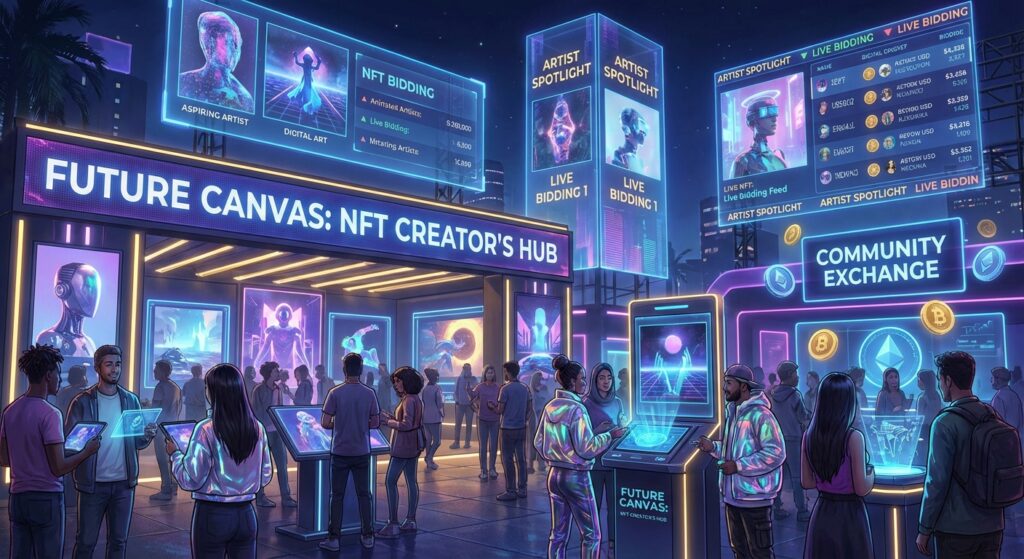
In the NFT space, community building is not supplementary to your art practice—it is essential to your success. Unlike traditional art markets where the work itself might be enough to attract attention, NFT success is deeply intertwined with your ability to build and nurture a dedicated community. This shift requires artists to develop new skills beyond their creative practice.
The most successful NFT artists spend approximately 50% of their time creating and 50% engaging with their community. This balance may feel uncomfortable initially, but the investment in relationship building typically yields exponential returns in visibility, sales, and career sustainability. Your community becomes both your support system and marketing department in this new ecosystem.
Twitter Strategies That Get Collectors’ Attention
Twitter remains the central hub of NFT culture and communication. Your strategy should balance authentic personal expression with strategic visibility tactics. Start by optimizing your profile with clear artwork examples as your banner, a professional but approachable profile picture, and a bio that succinctly communicates your artistic focus and links to your primary marketplace. The most effective NFT Twitter accounts maintain a consistent posting schedule of 2-5 tweets daily, balancing work-in-progress shares, finished pieces, thoughtful commentary on the market, and genuine engagement with other creators.
To accelerate your growth, actively participate in community initiatives like #NFTThursday, where creators share and support each other’s work. Engagement is reciprocal in this space—comments and substantive interactions with established artists and collectors often lead to follower growth and eventual sales. Unlike traditional social media where broadcast messaging dominates, NFT Twitter rewards dialogue and community contribution above self-promotion.
Discord Setup for Ongoing Collector Engagement
While Twitter serves as your public-facing presence, Discord provides the infrastructure for deeper community building and collector relations. A well-structured Discord server creates space for different levels of engagement, from casual browsers to dedicated collectors. At minimum, your server should include welcome, announcements, general discussion, and showcase channels. More developed communities might add collector-only access channels, work-in-progress previews, and dedicated spaces for collaboration discussions.
Effective Discord management requires consistent moderation and presence. Schedule regular community events like open studio sessions, collector AMAs, or creative challenges to maintain engagement between drops. Many successful artists dedicate 3-5 hours weekly to active Discord participation, recognizing that these communities often become the primary source of both emotional support and financial sustainability.
- Automate routine tasks with bots like MEE6 or Dyno to verify new members
- Create collector role verification that connects to wallet ownership
- Establish clear community guidelines and moderation protocols
- Schedule consistent engagement events to maintain community momentum
- Develop exclusive benefits for active community members and collectors
Remember that community building is marathon, not a sprint. The relationships you develop in your first months will often determine your trajectory for years to come. Prioritize authentic connection over transaction, even when financial pressures might tempt you to focus exclusively on sales messaging.
Collaborations With Established NFT Artists
Strategic collaborations can accelerate your visibility within the NFT ecosystem more effectively than almost any other approach. These partnerships expose your work to established collector bases while creating mutual value through creative exchange. Begin by genuinely supporting artists whose work resonates with yours—collect their pieces if possible, engage thoughtfully with their process, and become a valued community member before proposing collaboration. This authentic relationship-building approach yields more meaningful opportunities than cold outreach.
How to Avoid Common NFT Scams Targeting New Artists
As the NFT market has grown, so too have sophisticated scams specifically targeting new artists. Understanding these threats and implementing preventative measures is essential for protecting both your work and financial assets. The decentralized nature that makes NFTs revolutionary also creates unique vulnerabilities that differ from traditional art market risks. For enhanced security, consider using a secure hardware wallet to safeguard your digital assets.
Most common scams involve either direct theft of your NFTs through wallet access or more subtle exploitation of your work without permission. Being aware of these tactics is your first line of defense in an ecosystem where transactions are irreversible and recourse options limited.
Spotting Fake Marketplace Websites
Phishing sites mimicking popular NFT marketplaces have become increasingly sophisticated, often differing from legitimate URLs by just a single character. These sites prompt you to connect your wallet, which then grants attackers access to drain your assets. Always verify marketplace URLs directly through official Twitter accounts or bookmarked links rather than clicking through from emails or messages. Enable browser extensions that flag suspicious crypto sites, and develop the habit of double-checking domain names before connecting your wallet to any service.
When receiving marketplace links through Discord or Twitter DMs, treat them with extreme skepticism, even if they appear to come from trusted contacts whose accounts may have been compromised. Legitimate marketplaces will never ask you to sign unusual or unexpected transactions, particularly those requesting “approval for all” access to your wallet. For enhanced security, consider using a hardware wallet to protect your crypto assets.
Protecting Your Wallet From Draining Attacks
The most devastating attacks involve complete wallet drainage, where attackers gain permission to transfer all assets out of your wallet. To protect yourself, consider implementing a two-wallet system: a creation wallet used for minting and receiving payments, and a separate storage wallet where you transfer valuable assets for long-term holding. This compartmentalization ensures that even if your working wallet is compromised, your most valuable assets remain secure.
Practice strict operational security by never sharing screen images showing wallet addresses or seed phrases, using hardware wallets for significant holdings, and regularly reviewing wallet permissions through tools like Revoke.cash that can cancel unnecessary access granted to various platforms. Remember that in blockchain transactions, security responsibility falls entirely on the user—there is no customer service department that can reverse unauthorized transactions.
“NFT talk has literally broken the internet. From platforms like TikTok and Twitter to CNN News, the trending topic has left millions of artists wondering, what it is and how can it work for the artist, the collector, and more.”
Verifying Legitimate Collaboration Opportunities
As your visibility grows, you’ll likely receive collaboration offers from projects seeking to leverage your artistic reputation. While some represent genuine opportunities, others are attempts to associate with established artists without fair compensation. Before agreeing to any collaboration, thoroughly research the project’s team members (seeking verified social media accounts and professional backgrounds), review their smart contract code if possible, and connect with other artists who have previously worked with them. Legitimate projects will welcome this due diligence and provide transparent information about team background, tokenomics, and revenue sharing.
Establish clear written agreements regarding usage rights, revenue sharing, and creative control before beginning any collaborative work. The most successful collaborations involve equitable value exchange rather than extractive relationships that primarily benefit the project rather than the artist.
Success Stories: Artists Who Went From Unknown to NFT Sensations
The NFT space has created unprecedented opportunities for artists to achieve both creative recognition and financial success outside traditional systems. These success stories demonstrate various paths to establishing yourself in this evolving ecosystem and provide practical lessons for emerging creators.
FEWOCiOUS: From Teen Artist to Multi-Million Dollar Sales
Victor Langlois, known professionally as FEWOCiOUS, began creating digital art as a teenager coping with a challenging home environment. After discovering NFTs in 2020, his emotionally raw, vibrant style quickly gained attention from digital collectors. His breakthrough came at age 18 when Christie’s auctioned a collection of his works for $2.16 million, making him one of the youngest artists ever featured by the auction house.
FEWOCiOUS’s success demonstrates how NFTs can compress traditional career timelines. While previous art market dynamics might have required decades of gallery representation to reach major auction houses, blockchain technology allowed his distinctive artistic voice to find its audience in months rather than years. His approach centered on radical authenticity—sharing his personal journey as a transgender artist through both his work and his community engagement.
For emerging artists, the key lesson from FEWOCiOUS’s trajectory is the power of emotional resonance and narrative. Rather than trying to satisfy market expectations, he created deeply personal work that established a genuine connection with his audience. This authenticity became his most valuable asset in building a dedicated collector community.
Pak: Building Mystery Into Your Brand
In stark contrast to FEWOCiOUS’s personal approach, the anonymous artist Pak leveraged mystery and scarcity psychology to build one of the most valuable brands in digital art. Beginning with minimalist geometric works, Pak created elaborate drops with game-like mechanics that rewarded collector participation and community building. Their “Merge” project generated $91.8 million by incentivizing collectors to combine NFT “mass units” into single, larger NFTs—creating both scarcity and community engagement through clever tokenomics.
While Pak’s technical execution is flawless, their true innovation lies in distribution and engagement mechanics. Each project introduces novel collection dynamics that transform passive collectors into active participants. This gamification creates stronger community bonds and incentivizes collective action that benefits both the artist and existing collectors.
For new artists, Pak demonstrates how thoughtful tokenomics and distribution strategies can be as important as the artwork itself. By creating systems that reward early supporters and foster community collaboration, you can build collector loyalty that sustains long-term career development.
“Smart NFT artists will build in royalty allotments to their blockchains, which means that the artist can receive 8-10% of all future sales. This depends upon which platform the artist is using.”
Lessons From Artists Who Found Their Niche
Beyond these high-profile examples, the most instructive success stories often come from mid-tier artists who have built sustainable careers by dominating specific niches. These artists typically generate consistent five to six-figure annual incomes by deeply understanding and serving particular collector communities—whether focused on abstract landscapes, afrofuturism, architectural visualizations, or other specialized domains. Rather than competing for mainstream attention, they become the definitive voice within their chosen niche, building devoted collector bases that support their ongoing work.
The Environmental Concern: Addressing the Carbon Footprint of Your NFTs
The environmental impact of NFTs remains a significant concern for many artists and collectors. Understanding this issue and having thoughtful responses prepared is increasingly important for artists entering the space. The primary environmental concern centers around the energy consumption of proof-of-work blockchains like Ethereum’s original implementation.
Until Ethereum’s transition to proof-of-stake in 2022 (known as “The Merge”), minting a single NFT could consume as much electricity as a household uses in several days. This high energy consumption created legitimate environmental concerns that many artists and collectors found ethically problematic. For more insights on how NFTs are impacting the art world, explore the true value of NFTs in the art world.
The good news is that Ethereum’s shift to proof-of-stake has reduced its energy consumption by approximately 99.95%, dramatically decreasing the environmental impact of most NFT transactions. This technological evolution has addressed many of the valid criticisms regarding NFT sustainability.
However, public perception often lags behind technological reality, and you may still encounter potential collectors who associate all NFTs with high environmental costs. Preparing informative, non-defensive responses to these concerns demonstrates your awareness of the broader implications of your creative choices.
“Some NFTs can also change with time. With physical art, buyers hope their purchase always stays the same – any change usually results in a decrease in value — but with interactive NFTs, buyers can change or customise features after the purchase.”
Eco-Friendly Blockchain Options
| Blockchain | Energy Consumption | NFT Marketplaces | Community Size |
|---|---|---|---|
| Ethereum (post-merge) | Low | OpenSea, Foundation, SuperRare | Very Large |
| Tezos | Very Low | Objkt, fxhash | Medium |
| Solana | Very Low | Magic Eden, Solanart | Large |
| Flow | Very Low | NBA Top Shot, Versus | Medium |
Beyond Ethereum, several alternative blockchains offer even lower environmental impacts. Tezos has built a substantial NFT ecosystem around its inherently efficient proof-of-stake design, attracting environmentally conscious artists and collectors. Platforms like fxhash (for generative art) and Objkt (for general NFTs) provide viable alternatives with significantly different collector demographics than Ethereum marketplaces.
Solana offers another energy-efficient alternative with growing NFT infrastructure, particularly on marketplaces like Magic Eden. While each alternative blockchain has smaller collector communities than Ethereum, they often feature less competition and lower entry costs, which can benefit emerging artists.
When choosing your blockchain, consider both environmental impact and market reach. While Ethereum post-merge offers the largest potential audience with dramatically reduced environmental concerns, alternative chains may provide more accessible entry points for new artists concerned about initial costs and competition.
Carbon Offset Programs for NFT Artists
For artists committed to environmental responsibility, various carbon offset programs allow you to mitigate the impact of your NFT activities. Platforms like Aerial and Offsetra calculate the carbon footprint of blockchain transactions and facilitate investments in verified carbon reduction projects. Many artists include carbon offset costs in their pricing models and explicitly communicate these efforts to environmentally conscious collectors.
- Offsetra provides specific NFT carbon footprint calculators
- Aerial offers simplified offset purchasing integrated with creative workflows
- KlimaDAO allows direct on-chain carbon offsetting through cryptocurrency
- Nori focuses on verified carbon removal through agricultural practices
- Moss specializes in Amazon rainforest conservation projects
Beyond offsetting, consider how your artistic practice itself might address environmental themes. Many successful NFT artists have created work that directly engages with climate issues, using the proceeds to fund environmental initiatives. This alignment of artistic content with ethical action creates a compelling narrative that resonates with conscious collectors.
Remember that transparency about your environmental considerations demonstrates thoughtful engagement with legitimate concerns. Rather than dismissing environmental questions, use them as opportunities to educate collectors about the evolving technology and your personal commitment to responsible practices.
Future-Proof Your NFT Art Career
The NFT market will continue to evolve rapidly, with new technologies, platforms, and cultural shifts emerging regularly. Building a sustainable career requires adapting to these changes while maintaining your core artistic vision. The artists who thrive long-term will be those who view NFTs as tools rather than endpoints—using blockchain technology to enable creative expression and community building rather than chasing short-term market trends.
Diversification across platforms, blockchain technologies, and revenue streams provides the greatest resilience against market volatility. Rather than committing exclusively to a single marketplace or blockchain, consider establishing presence across multiple ecosystems while focusing your community-building efforts where they generate the strongest response. For a comprehensive guide on crypto exchanges, check out this Bitflyer review.
Developing Long-Term Collector Relationships
The most valuable asset in your NFT career isn’t any single artwork but the community of collectors who support your ongoing practice. Nurturing these relationships through consistent communication, exclusive access, and genuine appreciation transforms one-time buyers into long-term patrons. Consider implementing collector rewards like airdrops for existing holders, physical merchandise for digital collectors, or exclusive access to your creative process. These relationship-building efforts create collector loyalty that sustains your practice through market fluctuations.
Building Value Beyond the Initial Sale
The most successful NFT artists create ecosystems around their work rather than focusing solely on individual pieces. Consider how your creative practice might expand into physical merchandise, access tokens, metaverse integrations, or collaborative projects that build additional value for your existing collectors. This expansive approach transforms static artworks into dynamic entry points to broader creative worlds, generating multiple revenue streams and engagement opportunities from your core artistic vision.
Preparing for Market Fluctuations
NFT markets have demonstrated significant volatility, with dramatic expansions and contractions in overall trading volume and floor prices. Preparing for these fluctuations requires both financial planning and psychological resilience. Maintain liquid reserves during high-revenue periods to sustain your practice during market downturns, and develop revenue streams outside the NFT ecosystem that can provide stability during volatile periods. Most importantly, use market contractions as opportunities to refine your craft, deepen collector relationships, and position yourself for the next expansion phase.
Remember that artistic careers span decades, while market cycles typically last months to years. The artists who achieve long-term success focus on consistent creative development and community building rather than reacting to short-term market signals. By maintaining this long-term perspective, you can navigate the inevitable fluctuations of emerging markets while building a sustainable creative practice.
Frequently Asked Questions
As you begin your NFT journey, you’ll likely encounter many questions from both potential collectors and fellow artists. Having clear, informative responses prepared demonstrates your professionalism and helps educate others entering the space.
Do I need to be a digital artist to create NFTs?
No, artists working in any medium can create NFTs. While digital artists have a natural advantage in creating assets that exist natively in digital form, traditional painters, sculptors, and photographers can all participate by digitizing their physical work. Many successful NFT artists create physical pieces that they photograph or scan at high resolution, sometimes destroying the original to emphasize the digital token as the “true” artwork. Others maintain both physical and digital versions, using NFTs as certificates of authenticity for physical pieces. For artists interested in securing their digital assets, exploring a hardware wallet for security can be beneficial.
Consider how your existing artistic practice might extend into the digital realm rather than completely reinventing your approach. Your unique artistic voice and vision remain your most valuable assets, regardless of the medium in which they’re ultimately expressed.
How much money do I need to start selling NFT art?
- Wallet setup: $0-$100 depending on the blockchain
- First NFT mint: $30-$200 for gas fees on Ethereum (potentially $0 with lazy minting)
- Alternative blockchains: $1-$20 for minting on Tezos or Solana
- Community building: $0-$500 for Discord setup and promotion
- Hardware/software: Variable depending on your existing setup
The financial barrier to entry has decreased significantly with the introduction of lazy minting options on major marketplaces. These allow you to create listings without paying upfront gas fees, transferring those costs to the buyer at the time of purchase. While this reduces your initial investment, it may limit collector interest due to the additional costs buyers must bear. For more insights into the impact of NFTs, check out this article on the true value of NFTs in the art world.
For artists with limited financial resources, consider starting on more affordable blockchains like Tezos or Solana, where transaction fees typically range from cents to a few dollars rather than the tens or hundreds of dollars sometimes required on Ethereum. While these ecosystems have smaller collector bases, they often have more accessible entry points for new artists.
Remember that beyond the technical costs of minting, the most significant investment will be your time—building your presence, engaging with communities, and developing your creative practice for the digital realm. Budget for this time commitment as part of your overall investment strategy. For more insights, explore the true value of NFTs in the art world.
Can I sell the same artwork as both a physical piece and an NFT?
Yes, many artists successfully create hybrid physical/digital offerings. The key is transparency about exactly what collectors are receiving in each format. Some artists create NFTs that serve as ownership certificates for physical works, with the token including redemption instructions for the tangible piece. Others create companion pieces where physical and digital versions complement each other but remain distinct works. The most innovative approaches leverage the unique properties of each medium—creating physical works that can’t be fully replicated digitally and digital components impossible to reproduce physically.
When offering both formats, clearly communicate whether purchasing one grants rights to the other, whether physical pieces will be destroyed after digitization (increasing NFT scarcity), and how you’ll handle edition numbers across formats. This transparency builds trust with collectors in both traditional and NFT markets while allowing you to bridge these increasingly interconnected worlds.
What happens to my NFT art if the marketplace I used shuts down?
This is a common misconception about NFTs. Your artwork itself doesn’t live on the marketplace but on decentralized storage systems like IPFS or Arweave, with ownership records maintained on the blockchain. If a marketplace closes, your NFTs continue to exist and can be traded on any other platform that supports the same blockchain. This is why properly configured metadata and decentralized storage are crucial—they ensure your work survives beyond any single platform. When minting, verify that your marketplace uses decentralized storage rather than proprietary servers to maximize the longevity of your digital assets. For more insights on securing your digital assets, consider reading about Trezor Safe, a hardware wallet for crypto enthusiasts.
Are NFT sales taxable income and how should I report them?
Yes, in most jurisdictions, income from NFT sales is taxable and must be reported. The specific classification varies by country—in the US, for example, NFT creators typically report sales as self-employment income on Schedule C, while collectors may face capital gains tax on resales. Maintaining detailed records of all transactions is essential, including creation costs that may offset taxable income.
- Track all cryptocurrency transactions, including transfers between wallets
- Document creation expenses that may qualify as business deductions
- Consider using crypto tax software like TokenTax or CoinTracker
- Consult with a tax professional familiar with cryptocurrency and digital assets
- Set aside 25-30% of proceeds for potential tax obligations
The evolving regulatory landscape means tax treatment of NFTs remains somewhat uncertain in many jurisdictions. Taking a conservative approach to reporting and maintaining comprehensive documentation protects you from potential issues as regulations develop. Many artists establish formal business entities like LLCs to create clearer separation between personal and creative finances, which can provide both tax advantages and liability protection.
Remember that converting cryptocurrency to fiat currency typically triggers taxable events, even if you haven’t withdrawn funds to your bank account. Plan your conversions strategically to manage tax implications across fiscal years.
With the right approach to both creativity and business fundamentals, the NFT space offers unprecedented opportunities for artistic expression and financial independence. By focusing on authentic connection, continuous learning, and sustainable practices, you can build a rewarding creative career in this evolving ecosystem.
For ongoing guidance navigating the complex intersection of traditional art markets and NFTs, MyArtBroker provides resources to help both established and emerging artists maximize their potential in this revolutionary space.