


Key Takeaways
- Ethereum Layer 2 solutions can reduce transaction costs by up to 100x while increasing processing speeds from minutes to seconds
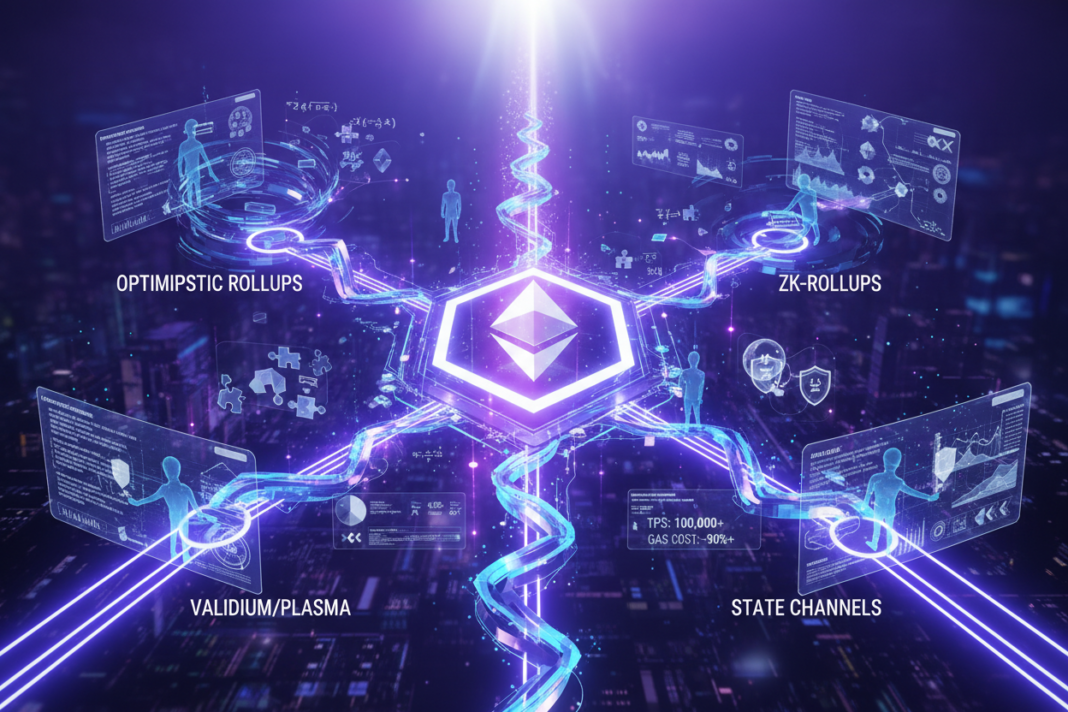
- The four major Layer 2 technologies—Optimistic Rollups, ZK-Rollups, Validium/Plasma, and State Channels—each offer unique advantages for different use cases
- Successful integration requires careful planning around RPC endpoints, smart contract deployment, and bridge implementation
- Projects like Uniswap, OpenSea, and Aave have already demonstrated remarkable improvements after Layer 2 integration
- As Ethereum evolves, a future-proof Layer 2 strategy will need to account for cross-L2 interoperability and upcoming protocol upgrades
Ethereum’s promise of decentralized applications has been hampered by one persistent challenge: scalability. As transaction volumes have surged, network congestion and sky-high gas fees have priced out many users, especially during peak periods. This is where Layer 2 solutions come in, offering a breath of fresh air to the ecosystem by handling transactions off the main chain while still inheriting Ethereum’s robust security. Coinbase Cloud has been at the forefront of providing infrastructure for these scaling solutions, helping developers overcome Ethereum’s limitations without sacrificing decentralization.
The statistics speak for themselves: Ethereum can process roughly 15-30 transactions per second on its base layer, while leading Layer 2 solutions can handle thousands or even tens of thousands. Gas fees that might cost $50-100 on mainnet during congestion can drop to mere cents on Layer 2. This dramatic improvement isn’t just a technical achievement—it’s opening doors for entirely new use cases that were previously impractical.
In this comprehensive guide, we’ll explore everything you need to know about integrating with Ethereum’s Layer 2 ecosystem—from understanding the different solutions available to implementing them in your projects and preparing for future developments.
Article-at-a-Glance
This article covers the complete journey of Ethereum Layer 2 integration—from understanding why it’s become essential, to comparing the major solutions, implementing integration in your own projects, and planning for future developments. You’ll learn about technical requirements, common challenges, and real-world success stories that demonstrate the transformative power of Layer 2 technologies.
Why Ethereum Layer 2 Integration is Now Essential
Ethereum’s limitations have become increasingly evident as the network has grown in popularity. With base layer gas fees sometimes exceeding $100 per transaction during peak periods, many everyday use cases simply became economically unviable. DeFi protocols requiring multiple transactions could cost hundreds in fees alone, making smaller investments completely impractical. NFT minting, another gas-intensive operation, priced out countless creators and collectors who couldn’t justify the high entry costs. For those looking to navigate these challenges, platforms like BitFlyer offer alternative solutions for managing transactions efficiently.
These scalability issues aren’t just inconvenient—they represent an existential threat to Ethereum’s vision of being a globally accessible platform for decentralized applications. While Ethereum’s eventual shift to proof-of-stake and sharding will help address some of these concerns, these upgrades will take time to fully implement and may not be sufficient on their own. Layer 2 solutions provide immediate relief while maintaining compatibility with existing Ethereum infrastructure.
The business case for Layer 2 integration has become overwhelming. Projects that have made the leap report not just dramatic cost savings but significant user growth. When Uniswap deployed on Optimism, they saw transaction costs drop by 98% compared to Layer 1, opening their platform to a much wider audience. Similarly, NFT marketplace OpenSea’s integration with Immutable X enabled gas-free trading, resulting in higher transaction volumes and improved user satisfaction.
Beyond cost reduction, Layer 2 integration offers competitive advantages that are becoming increasingly difficult to ignore. Applications that remain exclusively on Layer 1 risk losing market share to more nimble competitors who can offer essentially the same services at a fraction of the cost and with much faster execution. In today’s environment, Layer 2 integration isn’t just an optimization—it’s rapidly becoming a prerequisite for survival in the Ethereum ecosystem.
- Dramatic reduction in transaction costs (up to 99% in some cases)
- Significant increase in transaction throughput (from ~15 TPS to thousands)
- Maintenance of Ethereum’s security guarantees
- Improved user experience with faster confirmation times
- Access to new user segments priced out of Layer 1
The 4 Major Layer 2 Solutions You Need to Know
The Layer 2 ecosystem has evolved rapidly, with several approaches emerging to address Ethereum’s scalability challenges. Each solution makes different trade-offs between scalability, security, and complexity, making them suitable for different use cases. Understanding these differences is crucial for selecting the right Layer 2 technology for your specific requirements.
Optimistic Rollups: Arbitrum and Optimism
Optimistic rollups represent one of the most popular Layer 2 scaling approaches, with Arbitrum and Optimism leading the pack. These solutions work by processing transactions off-chain and then posting transaction data to Ethereum mainnet, “optimistically” assuming all transactions are valid unless proven otherwise through fraud proofs. This approach allows for significant throughput improvements while maintaining compatibility with existing Ethereum tools and smart contracts.
ZK-Rollups: zkSync and StarkNet
ZK-rollups like zkSync and StarkNet take a different approach to scaling, using zero-knowledge proofs to mathematically verify the validity of transactions. Rather than assuming transactions are valid, ZK-rollups cryptographically prove their correctness, eliminating the need for challenge periods and enabling faster withdrawals to mainnet compared to Optimistic rollups. This technology offers powerful privacy features and potentially higher security guarantees, though it typically requires more specialized knowledge to implement. For a comprehensive guide to secure crypto solutions, you might find the Trezor Safe 3 review insightful.
The mathematics behind zero-knowledge proofs is complex, but the benefits are straightforward: ZK-rollups can process thousands of transactions in a single proof, dramatically reducing the data that needs to be stored on Ethereum while maintaining security. Projects like zkSync have made significant progress in making this technology more accessible to developers through compatibility layers that support existing Solidity smart contracts.
Validium and Plasma: Immutable X
Validium and Plasma solutions like Immutable X take yet another approach to scaling, keeping transaction data entirely off-chain while using various mechanisms to ensure security. Immutable X, built specifically for NFT applications, offers gas-free minting and trading while still leveraging Ethereum’s security for asset ownership. This approach enables extremely high throughput—up to 9,000 transactions per second—making it ideal for NFT marketplaces and games that require frequent, low-value transactions.
State Channels: Lightning Network on Ethereum
State channels represent one of the earliest Layer 2 scaling solutions, creating private payment channels between parties that allow for nearly instant, fee-less transactions. While originally developed for Bitcoin (Lightning Network), state channel technology has been adapted for Ethereum through projects like Raiden Network. These solutions excel at high-frequency transactions between established parties, making them ideal for micropayments and streaming money applications.
The key advantage of state channels is their speed—transactions are essentially instantaneous once a channel is established. However, they require participants to lock up funds and are best suited for specific use cases rather than general-purpose applications. The technology continues to evolve, with newer implementations addressing early limitations around channel establishment and liquidity requirements.
How to Integrate Your Project with Layer 2
Successfully integrating with Layer 2 solutions requires careful planning and execution. While each Layer 2 technology has its own specific integration requirements, there are common steps and considerations that apply across all implementations. Let’s examine the key aspects of the integration process.
Technical Requirements Before You Start
Before beginning integration, assess your project’s specific needs and constraints. This includes understanding your transaction volume, gas cost sensitivity, and required finality time. Different Layer 2 solutions excel in different areas—Optimistic rollups offer broad compatibility but slower withdrawals, while ZK-rollups provide faster finality at the cost of more complex implementation. Your existing technical stack, including smart contract architecture and frontend requirements, will also influence which solution is most appropriate. For a deeper understanding of crypto platforms, you might find this Bitflyer review insightful.
Additionally, you’ll need to consider your team’s technical capabilities. Some Layer 2 solutions require specialized knowledge, particularly those using zero-knowledge proofs or custom virtual machines. Having team members familiar with these technologies or allocating time for upskilling is essential for successful implementation.
Setting Up RPC Endpoints
The first technical step in Layer 2 integration is configuring Remote Procedure Call (RPC) endpoints. These endpoints allow your application to communicate with the Layer 2 network just as it would with Ethereum mainnet. Most Layer 2 solutions provide public RPC endpoints that you can use for development, though production applications typically require dedicated endpoints for reliability and performance.
Configuration is generally straightforward—you’ll update your web3 provider or ethers.js instance to point to the Layer 2 RPC URL instead of mainnet. This simple change enables your application to interact with the Layer 2 environment, though additional adjustments will be needed for cross-layer functionality.
Smart Contract Deployment Across Layers
Depending on your chosen Layer 2 solution, smart contract deployment may be nearly identical to mainnet or require significant modifications. Optimistic rollups like Arbitrum and Optimism offer high EVM compatibility, allowing most Solidity contracts to deploy with minimal changes. ZK-rollups traditionally required more adaptation, though newer versions like zkSync 2.0 have dramatically improved compatibility.
When deploying, you’ll need to consider gas limits, which may differ from mainnet, and account for any opcodes that aren’t supported on your chosen Layer 2. Testing is crucial, as subtle differences in execution environment can lead to unexpected behavior. Many projects maintain separate repositories or branches for their Layer 2 implementations to manage these differences efficiently. For enhanced security, consider using a hardware wallet to protect your assets during deployment.
Bridge Implementation for Asset Transfers
Bridges are essential components of any Layer 2 integration, enabling assets to move between Ethereum mainnet and the Layer 2 environment. Most Layer 2 solutions provide official bridge contracts and interfaces, though integration complexity varies. Implementation typically involves connecting to the bridge contracts, managing approval flows, and handling the asynchronous nature of cross-layer transfers.
User experience around bridges deserves special attention. The delay between initiating a transfer and its completion (particularly for withdrawals from Optimistic rollups) can be confusing to users accustomed to instant finality. Clear communication about expected wait times and transaction status can significantly improve the user experience.
Testing and Security Considerations
Layer 2 integration introduces new security considerations that must be thoroughly tested. This includes verifying bridge functionality, testing under various network conditions, and ensuring your application gracefully handles the unique aspects of Layer 2 environments like potential reorgs in Optimistic rollups or proof generation delays in ZK systems. Comprehensive testing across different scenarios—including happy paths and various failure modes—is essential for reliable operation.
Real Benefits from Layer 2 Integration
The theoretical advantages of Layer 2 solutions are compelling, but real-world implementations have demonstrated concrete benefits that go beyond the whitepaper promises. Projects that have completed Layer 2 integration consistently report transformative improvements across multiple dimensions.
From DeFi protocols to NFT marketplaces, the impact has been substantial and measurable. These benefits compound over time as reduced friction leads to increased usage, creating a virtuous cycle of growth and improved user experience.
Transaction Cost Reduction: Up to 100x Savings
The most immediate and visible benefit of Layer 2 integration is the dramatic reduction in transaction costs. Operations that might cost $50-100 on Ethereum mainnet during periods of congestion typically cost less than $1 on Layer 2, with many transactions coming in under $0.10. For DeFi protocols where complex operations involve multiple contract interactions, these savings can be even more pronounced—a complex lending position that might cost $200 to establish on mainnet could cost just $2 on an Optimistic rollup or even less on a ZK-rollup.
Speed Improvements: From Minutes to Seconds
Confirmation times on Layer 2 solutions are significantly faster than on Ethereum mainnet. While an Ethereum transaction might take 15 seconds to a minute for initial confirmation, and several more minutes for enough confirmations to be considered final, Layer 2 transactions are often confirmed in 2-5 seconds. This speed improvement transforms the user experience, enabling applications that require quick feedback loops like trading, gaming, and social interactions.
User Experience Enhancement
Beyond the quantitative improvements in cost and speed, Layer 2 integration enables qualitative enhancements to user experience. Applications can implement more complex interaction patterns that would be prohibitively expensive on mainnet. Features like automatic compounding, frequent rebalancing, or social interactions that require on-chain transactions become feasible when gas costs are negligible.
The reduced friction also expands the potential user base. Many crypto-curious individuals have been deterred from trying Ethereum applications due to high gas costs, especially for smaller transactions. By removing this barrier, Layer 2 solutions make the ecosystem accessible to a much broader audience, including users in regions where typical mainnet gas fees would represent a significant portion of monthly income.
Perhaps most importantly, Layer 2 integration allows developers to focus on building innovative features rather than optimizing for gas efficiency. This shift in priorities has led to a new wave of experimentation and creativity in Ethereum applications, with teams exploring use cases that simply weren’t viable on Layer 1 alone.
Common Integration Challenges and Solutions
While the benefits of Layer 2 integration are substantial, the process isn’t without challenges. Teams undertaking this journey typically encounter several common obstacles that can delay implementation or create suboptimal user experiences if not properly addressed.
Understanding these challenges in advance allows for better planning and more efficient solutions. Many of these issues have established best practices that can significantly reduce their impact.
“The Layer 2 ecosystem is evolving rapidly, with new solutions emerging and existing ones improving constantly. What seems like a limitation today may be resolved in the next upgrade. Maintaining flexibility in your architecture will allow you to adapt to these improvements.” — Vitalik Buterin, Ethereum co-founder
The most successful integrations approach these challenges as opportunities for innovation rather than roadblocks. Teams that invest in developing deep understanding of Layer 2 mechanics often discover unique approaches that can become competitive advantages.
Bridge Security Risks
Bridges between Ethereum and Layer 2 networks represent critical infrastructure with unique security considerations. These contracts typically hold significant value and have been targets for some of the largest exploits in DeFi history. When implementing bridge functionality, it’s essential to use battle-tested bridge contracts from reputable Layer 2 providers rather than implementing custom solutions. Additionally, implementing gradual migration strategies rather than moving all assets at once can reduce exposure to bridge risks. For more insights on secure crypto practices, you might find this Trezor Model T review helpful.
Fragmented Liquidity Issues
As applications deploy across multiple Layer 2 solutions, liquidity tends to fragment, potentially reducing capital efficiency and user experience. This is particularly challenging for DeFi applications that rely on deep liquidity pools. Some projects have addressed this through incentive programs that concentrate liquidity on specific Layer 2s, while others implement cross-layer aggregation that allows users to access liquidity across multiple environments through a single interface.
The emergence of specialized Layer 2 aggregators like Socket and Li.Fi is helping address this challenge by providing unified access to liquidity across the ecosystem. These solutions handle the complexity of cross-layer bridging and routing, allowing applications to tap into the broader ecosystem rather than being limited to the liquidity available on a single Layer 2.
Cross-Layer Communication Problems
Communication between different Layer 2 solutions remains one of the most significant technical challenges in the ecosystem. Unlike transactions within a single environment, cross-layer operations typically require multiple steps and can introduce latency and complexity. Projects like Connext and Hop Protocol are building infrastructure to streamline these interactions, but application developers still need to carefully design their architectures to account for the asynchronous nature of cross-layer communication.
Many successful projects have adopted a modular approach, where core functionality exists on each supported Layer 2, with cross-layer communication reserved for specific operations that genuinely require it. This design minimizes dependency on cross-layer infrastructure while still enabling a unified user experience across the ecosystem. For a deeper dive into user experience and security features, check out this Edge Wallet review.
Integration Success Stories
The theoretical benefits of Layer 2 integration are compelling, but nothing demonstrates value like real-world success stories. Several prominent projects have completed Layer 2 integrations with impressive results, providing valuable blueprints for others to follow. These case studies highlight not just the outcomes but the strategic decisions that enabled successful implementations.
Uniswap on Optimism: 98% Fee Reduction
Uniswap’s deployment on Optimism stands as one of the most successful Layer 2 integrations to date. The leading decentralized exchange saw transaction fees drop by approximately 98% compared to mainnet, making smaller trades economically viable for the first time. Beyond cost savings, the faster transaction confirmations significantly improved the trading experience, reducing slippage and failed transactions during volatile market conditions.
Notably, Uniswap maintained feature parity between their mainnet and Optimism deployments, demonstrating that Layer 2 integration doesn’t need to compromise functionality. Their approach to gradually shifting liquidity through incentives and clear user education about bridging has become a model for other DeFi protocols undertaking similar migrations.
OpenSea on Immutable X: NFT Gas-Free Trading
OpenSea’s integration with Immutable X transformed the NFT trading experience by enabling gas-free transactions. This integration was particularly impactful for gaming NFTs and other frequent, lower-value transactions that were previously impractical on mainnet due to gas costs often exceeding the value of the assets themselves.
| Metric | Before Layer 2 | After Layer 2 | Improvement |
|---|---|---|---|
| Average Transaction Cost | $40-100 | $0 (gas-free) | 100% |
| Transactions Per Second | ~15 | 9,000+ | 60,000% |
| Average Confirmation Time | 3-5 minutes | < 2 seconds | 99% |
| Carbon Footprint Per Tx | High | Negligible | ~100% |
The implementation leveraged Immutable X’s StarkEx-powered Validium architecture, which maintains security through a system of fraud proofs while keeping transaction data off-chain. This approach enabled OpenSea to scale to thousands of transactions per second without compromising the ownership guarantees that make NFTs valuable. The success of this integration has accelerated adoption of NFTs in gaming and other high-volume applications.
By offering users a choice between Ethereum mainnet and Immutable X, OpenSea has been able to serve both high-value collectors who prioritize mainnet security and everyday users who value affordability and speed. This dual-deployment strategy represents a pragmatic approach that other projects can emulate during their transition to Layer 2.
These success stories demonstrate that Layer 2 integration isn’t just a technical upgrade—it’s a strategic decision that can fundamentally transform an application’s market position and growth trajectory. The projects that have successfully navigated this transition now enjoy significant competitive advantages in their respective segments.
Aave on Polygon: Lending at Scale
Aave’s deployment on Polygon showcases how Layer 2 solutions can transform lending protocols. After launching on Polygon, Aave saw user growth exceed 65% within the first three months as lower gas fees made borrowing and lending viable for smaller portfolios. Transaction costs dropped from $15-50 on mainnet to just cents on Polygon, enabling more frequent interactions with the protocol, including previously impractical activities like small collateral adjustments and frequent position management. For more insights on crypto lending platforms, check out this comprehensive guide to SALT Lending.
The integration’s success stemmed from Aave’s strategic approach to incentives, which helped migrate significant liquidity to Polygon while maintaining healthy reserves on mainnet. Their dual-deployment model allowed users to choose the environment that best suited their needs while using the same familiar interface. The technical implementation leveraged Polygon’s EVM compatibility to minimize code changes, allowing the team to focus on optimizing the user experience rather than rebuilding core functionality.
Future-Proofing Your Layer 2 Strategy
The Ethereum ecosystem continues to evolve at a rapid pace, with new Layer 2 solutions emerging and existing ones undergoing significant upgrades. A successful Layer 2 strategy must look beyond immediate implementation to consider how these changes will affect your project in the medium and long term. Preparing for future developments now can save substantial resources and maintain your competitive position as the landscape shifts.
Preparing for Cross-L2 Interoperability
Perhaps the most significant upcoming development is improved cross-Layer 2 interoperability. Currently, moving assets between different Layer 2 solutions typically requires going through Ethereum mainnet, adding cost and delay. However, solutions like Connext, Hop Protocol, and LayerZero are building direct bridges between Layer 2 networks that could dramatically improve this experience. Projects preparing for this shift are designing their smart contracts with hooks for cross-Layer communication and ensuring their token standards are compatible across environments.
The emergence of these cross-Layer solutions will likely lead to more specialized Layer 2 ecosystems, with some optimized for specific use cases rather than trying to serve all purposes. Forward-thinking projects are already considering how their applications might span multiple Layer 2 environments, using each for its strengths while maintaining a unified user experience through abstracted interfaces.
How the Merge Affects Your L2 Integration
Ethereum’s transition to proof-of-stake through The Merge has important implications for Layer 2 solutions. While The Merge itself doesn’t directly increase Ethereum’s throughput, it lays the groundwork for future upgrades that will. The reduced energy consumption and improved sustainability credentials benefit the entire ecosystem, including Layer 2 solutions that inherit these properties. Perhaps most significantly, proof-of-stake introduces more predictable block times, which can improve the user experience on Layer 2 solutions that depend on mainnet confirmations for certain operations.
Layer 2 projects should monitor changes to Ethereum’s gas dynamics post-Merge, as these could affect the economics of batch processing and proof submission. The move to proof-of-stake also introduces new validator dynamics that may influence optimal transaction scheduling and fee strategies on Layer 2 networks.
Upcoming Protocol Upgrades to Watch
Several technical upgrades on the Ethereum roadmap will have direct implications for Layer 2 solutions. Proto-danksharding (EIP-4844) will introduce “blob” transaction types specifically designed to reduce costs for rollups, potentially making Layer 2 transactions even cheaper and more efficient. Full danksharding, coming later, will further optimize data availability for rollups. Meanwhile, improvements in zero-knowledge proof technology are making ZK-rollups more practical for general-purpose applications, potentially shifting the balance between different Layer 2 approaches.
The introduction of account abstraction (EIP-4337) will enable more seamless user experiences across layers by allowing smart contract wallets to operate without requiring users to hold ETH on each layer for gas. This change could significantly reduce friction in cross-layer applications and enable new patterns for onboarding users to Layer 2 solutions.
Integration Is Just the Beginning
Successfully integrating with Ethereum Layer 2 solutions marks not an endpoint but the beginning of a new phase for your project. The dramatically reduced costs and improved performance unlock possibilities that simply weren’t viable on mainnet alone. Projects that have completed Layer 2 integration often discover that they can now implement features and interactions that were previously constrained by gas economics. This might include more frequent state updates, complex computations that would be prohibitively expensive on mainnet, or interactions designed for high-frequency, low-value transactions. For a comprehensive understanding of crypto exchanges that support such integrations, you might find this Bitpanda review insightful.
The most successful projects view Layer 2 not just as a scaling solution but as an opportunity to reimagine their applications from first principles. When transactions cost cents rather than dollars, and confirm in seconds rather than minutes, entirely new user experiences become possible. By embracing these possibilities rather than simply migrating existing functionality, projects can differentiate themselves and capture new market segments. Coinbase Cloud continues to provide infrastructure and support for projects exploring these new frontiers, offering secure, reliable access to the Layer 2 ecosystem.
Frequently Asked Questions
As more projects explore Layer 2 integration, certain questions consistently arise during the planning and implementation process. The following answers address the most common concerns based on the experiences of projects that have successfully completed their integrations.
Which Layer 2 solution is best for my DeFi application?
The optimal Layer 2 solution for your DeFi application depends on several factors including your specific requirements for transaction finality, gas efficiency, and EVM compatibility. Optimistic rollups like Arbitrum and Optimism offer excellent compatibility with existing Ethereum tools and contracts, making them ideal for complex DeFi applications that rely on composability. Their main drawback is the longer withdrawal period (typically 7 days) required for moving funds back to mainnet.
ZK-rollups like zkSync and StarkNet offer faster finality and potentially lower costs for certain operations, though they may require more adaptation of existing contracts. For applications prioritizing immediate finality and frequent withdrawals, ZK-rollups have significant advantages despite their higher implementation complexity. Many successful DeFi projects have opted to deploy on multiple Layer 2 solutions to maximize their reach, though this approach requires more resources for maintenance and liquidity management.
Do I need to modify my existing smart contracts to work on Layer 2?
The extent of required modifications varies significantly depending on which Layer 2 solution you choose and the complexity of your contracts. Optimistic rollups like Arbitrum and Optimism offer high EVM compatibility, allowing many contracts to deploy with minimal or no changes. However, contracts that rely heavily on gas optimizations, make assumptions about block times, or use unsupported opcodes may still require adaptation.
ZK-rollups traditionally required more substantial modifications, though newer versions have dramatically improved compatibility. zkSync 2.0, for instance, supports Solidity and most EVM features, though some gas-intensive operations may behave differently. When modifying contracts for Layer 2, focus particularly on gas assumptions (which may need adjustment for the Layer 2 environment), oracles (which may need Layer 2-specific data sources), and any cross-contract interactions that might span different layers.
How do Layer 2 solutions maintain Ethereum’s security guarantees?
- Optimistic rollups use fraud proofs to ensure that invalid state transitions can be challenged and rejected
- ZK-rollups employ cryptographic proofs that mathematically verify the correctness of all transactions
- All major Layer 2 solutions post transaction data or proofs to Ethereum mainnet
- User funds are ultimately secured by Ethereum’s consensus mechanism, not the Layer 2 operators
- Force exit mechanisms allow users to withdraw funds even if Layer 2 operators become malicious or unavailable
Layer 2 solutions are designed to inherit Ethereum’s security while improving scalability. They achieve this by processing transactions off-chain but anchoring the results back to Ethereum mainnet, where they benefit from Ethereum’s decentralized consensus. The specific security models vary between solutions, but all major Layer 2 networks are designed with the principle that users should never lose funds due to malicious behavior by operators.
It’s important to understand that newer Layer 2 solutions may still have elements of centralization in their current implementations, such as sequencers controlled by single entities. Most have roadmaps toward greater decentralization, but users should evaluate the current state of each solution rather than just future plans when assessing security. For those interested in securing their crypto investments further, consider using a YubiKey hardware security key.
For production applications handling significant value, consider implementing additional safeguards such as rate limits on deposits, gradual rather than immediate migration of funds, and monitoring for unusual activity on the Layer 2 network. These precautions can provide an extra layer of protection during the ecosystem’s maturation. For enhanced security, you might also consider using a hardware security key like YubiKey to secure your crypto investments.
What happens to my Layer 2 integration when Ethereum completes its scaling upgrades?
Ethereum’s planned scaling upgrades like sharding will complement rather than replace Layer 2 solutions. In fact, many upcoming Ethereum improvements like proto-danksharding (EIP-4844) are specifically designed to make Layer 2 solutions more efficient. When these upgrades are implemented, your Layer 2 integration will likely benefit from lower costs for data availability and improved throughput without requiring significant changes. The Ethereum foundation and major Layer 2 developers coordinate closely to ensure compatibility and maximize synergies between Layer 1 upgrades and Layer 2 solutions. For those interested in how these integrations can impact your crypto assets, consider exploring the YouHodler platform for more insights.
How can users move assets between Layer 1 and different Layer 2 solutions?
Users typically move assets between Layer 1 and Layer 2 through bridge contracts that lock tokens on one layer and mint corresponding representations on the other. Each Layer 2 solution provides official bridges with varying interfaces, security models, and withdrawal periods. Optimistic rollups generally require a 7-day waiting period for withdrawals to Layer 1 (though fast withdrawal services are available for a fee), while ZK-rollups can enable withdrawals as soon as the zero-knowledge proof is generated and verified on mainnet.
For moving assets directly between different Layer 2 solutions, specialized bridges like Hop Protocol, Connext, and LayerZero offer more efficient paths than going through mainnet. These services maintain liquidity on multiple layers and use various mechanisms to facilitate cross-layer transfers without requiring users to wait for the full challenge period of optimistic rollups.
When implementing bridge functionality in your application, focus on creating a clear, intuitive interface that helps users understand the process, expected waiting periods, and any associated costs. Providing status updates during longer operations like withdrawals from optimistic rollups can significantly improve the user experience and reduce support inquiries.
Ethereum Layer 2 solutions are becoming increasingly popular as they offer a way to scale the Ethereum network while reducing transaction fees. One of the most promising developments in this area is the integration of Layer 2 solutions with existing platforms, allowing for seamless user experiences. For example, platforms like Bitflyer are exploring these innovations to enhance their services. To learn more about this, check out this Bitflyer review for a comprehensive guide to the ultimate crypto exchange.