

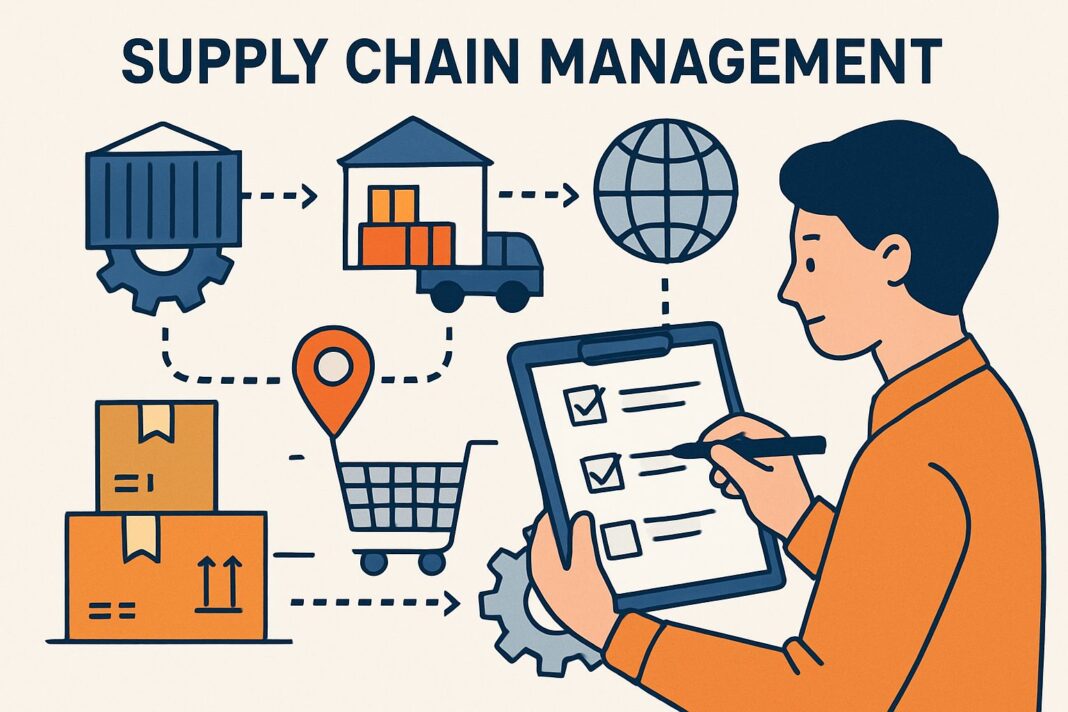

- IBM Blockchain creates a tamper-proof, shared ledger that gives every supply chain partner real-time visibility into product movement, from raw materials to final delivery.
- Walmart reduced food traceability time from 7 days to just 2.2 seconds using IBM Food Trust — one of the most cited real-world blockchain wins in supply chain history.
- Smart contracts built into IBM Blockchain automatically trigger payments, alerts, and compliance actions the moment predefined conditions are met — no manual input required.
- Integrating blockchain with legacy systems and convincing all partners to adopt a shared platform remain the two biggest hurdles companies face during implementation.
- Keep reading to see how specific industries — from pharmaceuticals to luxury goods — are using IBM Blockchain to eliminate counterfeiting and meet regulatory requirements faster.
Most supply chains are still running on a patchwork of emails, spreadsheets, and disconnected databases — and that’s exactly where fraud, delays, and costly errors hide.
IBM Blockchain is addressing this directly by giving supply chain participants a single, shared, and tamper-proof record of every transaction. Whether you’re managing food safety, pharmaceutical compliance, or global shipping documentation, the underlying problem is the same: too many parties, too little trust, and no single source of truth. IBM’s blockchain infrastructure is built to fix all three at once.
IBM Blockchain Fixes What Traditional Supply Chains Can’t
Traditional supply chains were never designed for the level of complexity they operate in today. A single product can pass through dozens of hands — raw material suppliers, manufacturers, freight forwarders, customs brokers, distributors, and retailers — before it reaches a consumer. Each of those handoffs is a potential point of failure, and most companies have no reliable way to verify what actually happened at each step.
Why Supply Chain Visibility Fails Without Blockchain
The core issue is data fragmentation. Each partner in a supply chain maintains their own records, in their own systems, with no standardized way to share or verify that information. When something goes wrong — a contaminated food batch, a counterfeit part, a delayed shipment — tracing the root cause can take days or even weeks. In the pharmaceutical industry, that delay can cost lives. In food supply chains, it can trigger recalls that affect thousands of consumers before the source is even identified. For more insights, explore how blockchain technology is enhancing supply chain transparency.
Legacy systems like EDI (Electronic Data Interchange) help move data between partners, but they don’t verify it. A supplier can submit incorrect shipment data, and the receiving party has no way to confirm its accuracy without a manual audit. This creates the trust gap that blockchain directly solves.
How IBM Blockchain Creates a Shared, Tamper-Proof Data Record
IBM Blockchain is built on Hyperledger Fabric, an open-source, permissioned blockchain framework. Unlike public blockchains like Bitcoin, Hyperledger Fabric allows businesses to control exactly who participates in the network and what data they can access. Every transaction is cryptographically signed, time-stamped, and added to a distributed ledger that all authorized parties can read — but no single party can alter.
Once a record is written to the IBM Blockchain ledger, changing it would require altering every subsequent block across every copy of the ledger simultaneously — a computational impossibility in a properly configured network. This is what makes the data trustworthy without requiring participants to trust each other personally.
From 7 Days to 2.2 Seconds: What Real Transparency Looks Like
The most frequently cited proof point for IBM Blockchain in supply chains is Walmart’s implementation of IBM Food Trust. Before deploying blockchain, Walmart needed approximately 7 days to trace the origin of a mango sold in one of their stores. After implementing IBM Food Trust, that same trace takes 2.2 seconds. That’s not an incremental improvement — it’s a fundamental restructuring of how supply chain data is captured and accessed.
How IBM Blockchain Actually Works in a Supply Chain
Understanding the mechanics behind IBM Blockchain helps supply chain leaders make better implementation decisions. At its core, the system works by replacing isolated, party-specific databases with a shared distributed ledger that all trusted network participants write to and read from in real time.
Each time a product changes hands, a new transaction is recorded as a block. That block contains the product ID, transaction details, timestamp, location data, and a cryptographic hash of the previous block. These blocks chain together sequentially, creating an unbroken, chronological history of every event in a product’s journey.
The Distributed Ledger: One Version of the Truth for All Partners
How a Single Shipment Gets Recorded on IBM Blockchain:
Step 1 — Origin: A farmer harvests produce and scans a QR code linked to that batch. The blockchain records: farm ID, harvest date, location, and inspector sign-off.
Step 2 — Processing: A food processor receives the batch, scans it, and records: processing facility ID, temperature logs, and packaging details.
Step 3 — Shipping: A freight carrier picks up the shipment. IoT sensors log temperature and humidity in real time, feeding data directly to the ledger.
Step 4 — Retail: The retailer receives and scans the batch. The full chain of custody — from farm to shelf — is now permanently stored and accessible in 2.2 seconds.
Every participant in this chain sees the same record. There’s no version A held by the supplier and version B held by the retailer. This eliminates disputes about what was shipped, when it arrived, and in what condition — three of the most common friction points in global supply chains.
Cryptographic Hashing: Why No One Can Alter the Record
Each block in the IBM Blockchain ledger contains a cryptographic hash — a unique string of characters generated from the block’s data. Change even a single character in that block, and the hash changes entirely. Since every block also contains the hash of the block before it, altering one record invalidates every record that follows it. This is the technical backbone of blockchain’s immutability, and it’s why IBM Blockchain can be trusted as an audit trail without requiring a central authority to manage it.
IoT Sensors Feed Real-Time Data Directly Into the Blockchain
IBM Blockchain’s power multiplies significantly when combined with Internet of Things (IoT) devices. Rather than relying on manual data entry — which is slow, error-prone, and easily manipulated — IoT sensors can feed continuous, automated data streams directly into the ledger. In cold chain logistics, for example, temperature and humidity sensors attached to shipping containers record conditions throughout transit. If a temperature threshold is breached, the blockchain logs it instantly and a smart contract can trigger an alert or halt a payment automatically.
- Cold chain logistics: Continuous temperature and humidity monitoring logged to the ledger at defined intervals
- Pharmaceutical shipments: GPS tracking and tamper-detection sensors recording every movement and access event
- Manufacturing components: RFID tags scanning parts through assembly lines, confirming provenance and quality checks
- Agricultural supply chains: Soil, weather, and harvest sensors verifying the conditions under which a product was grown
This IoT-blockchain integration effectively removes the human error variable from data collection, which is one of the most significant reliability improvements a supply chain operation can make.
Key Benefits That Matter to Supply Chain Leaders
IBM Blockchain doesn’t just add a technology layer — it changes what’s operationally possible. The benefits fall into four high-impact categories that directly affect a company’s bottom line, regulatory standing, and brand reputation.
Product Authenticity Verification Across Pharmaceuticals, Food, and Luxury Goods
Counterfeit products cause significant damage across multiple industries. In pharmaceuticals, fake drugs contribute to preventable deaths globally. In luxury goods, counterfeits erode brand value and consumer trust. IBM Blockchain addresses this by creating a verified chain of custody that starts at the point of origin. Every product that passes through the network carries a blockchain-backed identity — one that cannot be duplicated or forged without detection. Brands using IBM Blockchain can offer consumers and regulators a scan-to-verify mechanism that proves authenticity at any point in the product’s life.
Fraud and Counterfeiting Drop When Every Handoff Is Recorded
Fraud in supply chains often thrives in the gaps — the moments between handoffs where data isn’t captured or verified. IBM Blockchain closes those gaps by requiring every transaction to be recorded and signed by the responsible party before the next step can proceed. This accountability structure makes it significantly harder to introduce fraudulent products, falsify shipping records, or misrepresent the origin of goods.
A key example of this in action is De Beers and its Tracr platform, which uses blockchain to track individual diamonds from mine to retailer. Each diamond is assigned a unique digital identity that records its physical characteristics, origin, and chain of custody. This makes it effectively impossible to introduce a conflict diamond into the supply chain without detection.
The effect on fraud rates isn’t just theoretical. When every handoff is recorded with a cryptographic timestamp and a verified participant signature, the risk-reward calculation for fraud shifts dramatically. The blockchain doesn’t just detect fraud after the fact — its architecture actively deters it. For those interested in how this technology can be applied, understanding ethical screening frameworks is crucial.
Faster Dispute Resolution With an Immutable Audit Trail
Disputes between supply chain partners are expensive and time-consuming. When a shipment arrives damaged, short on quantity, or out of compliance, both parties typically spend days pulling records from different systems, cross-referencing documents, and arguing over whose data is correct. IBM Blockchain eliminates that argument entirely — there is one record, it is shared, and neither party can alter it after the fact.
Instead of a dispute taking weeks to resolve through back-and-forth emails and legal pressure, the blockchain audit trail gives both parties immediate access to exactly what happened, when it happened, and who was responsible at each step. Resolution time drops from weeks to hours in many documented implementations, and the reduction in legal costs alone can justify a significant portion of the blockchain implementation investment.
Regulatory Compliance Becomes Easier to Prove
- FDA Food Safety Modernization Act (FSMA): Requires food companies to trace product origins rapidly — IBM Food Trust directly supports this mandate
- EU General Food Law: Mandates traceability one step back and one step forward in the supply chain — blockchain automates this documentation
- Drug Supply Chain Security Act (DSCSA): Requires pharmaceutical manufacturers to track and trace prescription drugs — IBM Blockchain creates the verified audit trail regulators require
- EU Battery Regulation: Demands sourcing transparency for raw materials like cobalt and lithium — blockchain-verified sourcing records satisfy this directly
- Customs and trade compliance: Blockchain-backed documentation accelerates customs clearance by providing pre-verified shipment records
Regulatory audits used to mean pulling paper records, chasing down supplier documentation, and manually compiling proof of compliance. With IBM Blockchain, every compliance-relevant event is already recorded, timestamped, and cryptographically verified before the auditor even asks for it.
This shifts compliance from a reactive scramble to a proactive, always-ready posture. Companies operating in heavily regulated industries — food, pharmaceuticals, electronics, and automotive — are finding that blockchain doesn’t just help them pass audits. It fundamentally changes how much time and staff they dedicate to compliance preparation.
The ripple effect on supplier relationships is equally significant. When your blockchain network already logs supplier certifications, inspection results, and material origins automatically, onboarding a new supplier into a compliance framework becomes a matter of network access rather than a months-long documentation project.
Smart Contracts Remove the Middleman From Supply Chain Processes
Smart contracts are self-executing programs stored on the blockchain that automatically trigger predefined actions when specific conditions are met. In a supply chain context, they function as the operational backbone that connects data capture to business action — without requiring a human to review, approve, or initiate anything. For those interested in the broader implications of blockchain technology, exploring Bitcoin IRAs and their benefits can provide additional insights into how blockchain is transforming various industries.
Think of a smart contract as a standing instruction set written directly into the ledger. When a shipment’s GPS coordinates confirm it has crossed a border, the smart contract automatically triggers customs documentation. When an IoT sensor confirms that a cold-chain delivery arrived within the correct temperature range, payment is released to the carrier immediately — no invoice required, no accounts payable delay.
The efficiency gains here are not marginal. Traditional supply chain payment cycles can run 30 to 90 days because of manual verification steps, invoice processing, and approval chains. Smart contracts can compress that to minutes. For suppliers operating on tight cash flow, this is transformative. For buyers, it means fewer payment disputes and stronger supplier relationships built on speed and reliability rather than paperwork.
IBM Blockchain’s implementation of smart contracts through Hyperledger Fabric supports complex, multi-party logic. A single smart contract can simultaneously notify a warehouse, release payment to a carrier, update inventory records, and flag a compliance checkpoint — all triggered by one verified data event. That level of coordination, done manually, would require multiple staff members across multiple departments.
- Automated payment release: Funds transfer the moment delivery conditions are verified on-chain
- Instant compliance flagging: Any deviation from agreed parameters triggers an immediate alert to all relevant parties
- Dynamic inventory updates: Warehouse systems update automatically when blockchain confirms a shipment’s arrival
- Supplier performance tracking: On-time delivery rates, quality metrics, and compliance scores are logged automatically for every transaction
- Penalty enforcement: Contract breaches trigger pre-agreed penalties without negotiation or legal intervention
How Smart Contracts Trigger Automatic Actions at Each Supply Chain Step
Every step in a supply chain can be mapped to a smart contract trigger. At the procurement stage, a purchase order confirmation on the blockchain activates a smart contract that notifies the supplier, reserves warehouse space, and schedules a quality inspection — simultaneously. At the shipping stage, carrier pickup confirmation triggers insurance activation and initiates the customs pre-clearance process. Each event in the supply chain becomes a data input that drives automated downstream actions.
This is particularly powerful in multi-tier supply chains where Tier 2 and Tier 3 suppliers are often invisible to the brand at the top of the chain. Smart contracts can be designed to require Tier 2 suppliers to submit verified material sourcing data before a Tier 1 supplier’s shipment is accepted. This cascading verification logic, encoded into the blockchain, gives brands visibility and accountability several layers deeper than traditional procurement systems can reach.
Lower Labor Costs and Faster Settlements With Zero Manual Input
Every manual touchpoint in a supply chain process carries a labor cost. Someone has to receive the invoice, verify it against the purchase order, confirm the delivery, get approval, and initiate payment. IBM Blockchain with smart contracts eliminates most of those touchpoints. In large-scale supply chain operations, this can translate to measurable reductions in administrative headcount requirements — not by eliminating jobs, but by redeploying staff from repetitive verification tasks to higher-value supply chain strategy and exception management work.
Real Companies Using IBM Blockchain Right Now
The most compelling evidence for IBM Blockchain’s impact in supply chains comes not from theoretical models but from the operational results of companies that have already deployed it at scale. Across food safety, luxury goods, automotive, and global shipping, the pattern is consistent: faster data access, stronger compliance, and measurable fraud reduction.
These are not pilot programs running in controlled lab environments. These are production deployments handling millions of transactions across global supply chains, and their results have been independently documented and publicly reported.
Walmart and IBM Food Trust Cut Mango Tracing From 7 Days to 2.2 Seconds
Walmart’s deployment of IBM Food Trust is the benchmark case study for blockchain in food supply chains. The retailer partnered with IBM to build a network where every participant in the food supply chain — farmers, processors, distributors, and retailers — logs their data onto a shared blockchain ledger. The result was a traceability capability that reduced mango origin tracing from approximately 7 days to 2.2 seconds, a figure that has since become one of the most cited statistics in supply chain technology discussions.
Following this success, Walmart made IBM Food Trust blockchain traceability mandatory for all leafy green suppliers in the United States. This is a critical point — Walmart didn’t just adopt blockchain internally. They used their purchasing power to drive blockchain adoption across their entire supplier network, effectively setting a new industry standard for food traceability in US retail supply chains.
De Beers Uses Tracr to Block Conflict Diamonds From Their Supply Chain
- Each diamond registered on the Tracr platform receives a unique digital identity containing over 200 data points
- Physical characteristics — carat weight, color, clarity, and cut — are recorded and matched to the digital record at every transfer point
- The blockchain log follows the diamond from the mine through cutting, polishing, and retail, with each step cryptographically verified
- Any attempt to substitute a conflict diamond for a registered stone is detectable because the physical characteristics won’t match the blockchain record
De Beers built Tracr on a blockchain architecture that gives participating retailers and consumers the ability to verify the ethical provenance of a diamond before purchase. This directly addresses one of the luxury goods industry’s most persistent reputational risks — conflict diamonds entering legitimate supply chains through falsified documentation. For more insights on how blockchain technology is enhancing supply chain transparency, explore further resources.
The Tracr platform demonstrates something important about blockchain implementation strategy: the most effective deployments don’t just solve an operational problem, they create a consumer-facing trust signal. A customer who can scan a QR code and see the verified journey of their diamond from a specific mine in Botswana is a more confident buyer — and that confidence has direct commercial value.
De Beers opened Tracr to other diamond industry participants in 2020, transforming it from an internal tool into an industry-wide standard. This consortium approach — where a dominant player builds the infrastructure and then invites competitors to join — is emerging as the most effective model for driving blockchain adoption across entire industries.
Volvo Tracks Cobalt Sourcing for EU Compliance With Circulor
Volvo Cars partnered with Circulor to trace cobalt — a critical battery material with significant ethical sourcing concerns — from mines in the Democratic Republic of Congo through their battery supply chain. Using blockchain, Volvo can now verify that the cobalt in their electric vehicle batteries meets responsible sourcing standards required under the EU Battery Regulation. Every transfer of cobalt is logged on the blockchain with verified origin data, processing records, and chain-of-custody documentation, giving Volvo the audit-ready proof of compliance that EU regulators are increasingly demanding from EV manufacturers.
The Biggest Challenges When Implementing Blockchain in Supply Chains
IBM Blockchain delivers substantial operational benefits, but the path to implementation is not frictionless. The technology itself is mature and well-documented — the harder challenges are organizational, structural, and commercial. Companies that go in with a clear understanding of these obstacles are significantly better positioned to navigate them successfully.
The two most consistently reported barriers are partner adoption and legacy system integration. Neither is insurmountable, but both require deliberate planning, executive sponsorship, and in many cases, a phased rollout strategy that builds momentum before demanding full network participation.
Getting All Supply Chain Partners Onto One Shared Platform
A blockchain network is only as valuable as the number of verified participants contributing data to it. If a company implements IBM Blockchain internally but their Tier 1 suppliers are still submitting data via email and spreadsheets, the traceability chain breaks the moment it leaves the buyer’s four walls. Convincing suppliers — especially smaller ones with limited IT resources — to adopt a new platform, train their staff, and change established workflows is a significant change management challenge. The companies that have succeeded, like Walmart with IBM Food Trust, have done so by making participation a contractual requirement rather than a voluntary choice.
Integrating Blockchain With Existing Legacy Systems
Most large enterprises run supply chain operations on ERP systems like SAP or Oracle, alongside warehouse management systems, transportation management platforms, and customs software that were built long before blockchain existed. Connecting these systems to an IBM Blockchain network requires middleware integration layers, API development, and in some cases, significant customization of existing software. IBM offers integration tools through its IBM Blockchain Platform that are designed to bridge these gaps, but companies should budget meaningful time and technical resources for this integration work — it is rarely plug-and-play in a mature enterprise environment.
What the Future of Blockchain in Supply Chains Looks Like
Blockchain in supply chains is no longer a forward-looking concept — it’s an accelerating deployment. The next phase of adoption isn’t about proving the technology works. It’s about scaling what already works across more industries, more participants, and more operational layers. The companies building that infrastructure now are positioning themselves to set the standards everyone else will follow. For more insights, check out how blockchain technology is enhancing supply chain transparency.
Three specific developments are driving the next wave: the convergence of IoT and blockchain for automated quality control, the formation of cross-industry consortia that are building shared standards, and advances in frameworks like Hyperledger Fabric and Polygon that are directly addressing the scalability limitations that slowed early adoption.
IoT and Blockchain Convergence Will Automate Quality Control
The combination of IoT sensor networks and blockchain ledgers is moving quality control from a manual inspection process to a continuous, automated verification system. When sensors embedded in shipping containers, storage facilities, and manufacturing equipment feed real-time data directly to a blockchain ledger, quality deviations are captured the instant they occur — not discovered days later during a manual audit. For industries like pharmaceuticals, where a single temperature excursion can render an entire shipment non-compliant, this convergence isn’t a convenience feature. It’s a patient safety mechanism. IBM’s integration of IoT data streams with its blockchain platform through partnerships with sensor manufacturers and logistics providers is making this a deployable reality rather than a research concept.
Cross-Industry Consortia Are Building Shared Blockchain Standards
One of the structural limitations of early blockchain deployments was fragmentation — pharmaceutical companies built their own networks, food companies built different ones, and shipping companies built yet another set. Data couldn’t move between them, which undermined the fundamental value proposition of a shared ledger. Cross-industry consortia are solving this by developing interoperability standards that allow different blockchain networks to communicate and verify data across industry boundaries.
The Global Shipping Business Network (GSBN), the Pharmaceutical Supply Chain Initiative (PSCI), and food industry groups using IBM Food Trust are all building toward a future where a product’s blockchain record follows it seamlessly from raw material to consumer — regardless of which industry’s network it passes through. IBM is actively participating in multiple consortia efforts, positioning its Hyperledger Fabric infrastructure as the common backbone that different industry networks can build on top of.
Hyperledger and Polygon Are Solving the Scalability Problem
Blockchain Scalability: Where the Frameworks Stand
Hyperledger Fabric (IBM’s Foundation): Permissioned architecture processes thousands of transactions per second within enterprise networks. Designed specifically for business use cases — not public cryptocurrency traffic. Modular design allows companies to customize consensus mechanisms for their specific throughput requirements.
Polygon (Layer 2 Ethereum Scaling): Processes up to 65,000 transactions per second using a proof-of-stake consensus model. Enables supply chain networks that need public verifiability (e.g., consumer-facing product authentication) to operate at commercial scale without prohibitive transaction costs.
Hybrid Approaches: Some IBM deployments combine Hyperledger Fabric for internal enterprise transactions with public blockchain anchoring for regulatory compliance checkpoints — getting the speed of a private network with the verifiability of a public one.
Early blockchain systems struggled with throughput. Bitcoin processes approximately 7 transactions per second — a rate that is completely inadequate for a global supply chain handling millions of shipment events daily. Hyperledger Fabric solves this through its permissioned architecture, where only verified network participants process transactions, dramatically reducing the computational overhead that slows public blockchains.
The practical result for supply chain operators is that the scalability question has largely been answered for enterprise deployments. A properly configured Hyperledger Fabric network can handle the transaction volumes of a large multinational supply chain without performance degradation. The remaining engineering challenges are about interoperability between networks — and that’s exactly what the consortia efforts described above are working to solve.
Polygon’s role in this ecosystem is particularly interesting for supply chain applications that need a public verification layer. A luxury brand, for example, might use a private Hyperledger Fabric network for internal supply chain operations, but anchor critical provenance records to Polygon’s public blockchain so that consumers can independently verify product authenticity without needing access to the private network. This hybrid model gives companies the best of both architectures: speed and privacy internally, transparency and verifiability externally.
IBM Blockchain Is Now a Competitive Requirement, Not an Experiment
When Walmart made IBM Food Trust blockchain traceability mandatory for its leafy green suppliers, it didn’t just change Walmart’s supply chain. It changed what it means to be a supplier in modern food retail. Companies that couldn’t meet that requirement lost access to one of the world’s largest retail networks. That dynamic — where a dominant buyer uses purchasing power to drive blockchain adoption across their entire supplier base — is now replicating across industries. Automotive OEMs are requiring battery material traceability from their suppliers. Pharmaceutical distributors are requiring DSCSA-compliant blockchain records from manufacturers. The adoption curve is no longer voluntary.
For supply chain leaders evaluating IBM Blockchain today, the strategic question has shifted. It’s no longer “should we explore this?” It’s “how quickly can we implement this before our largest customers require it?” Companies that treat blockchain as a future initiative rather than a current priority risk finding themselves locked out of key commercial relationships within the next three to five years. The infrastructure is proven, the case studies are documented, and the regulatory pressure is building. The window for leisurely evaluation is closing.
Frequently Asked Questions
IBM Blockchain in supply chains raises practical questions from operations leaders, procurement teams, and technology decision-makers. The answers below address the most common points of confusion and concern from companies at various stages of evaluating or implementing the technology. For further insights, you might explore Bitcoin’s viability for retirement portfolios to understand broader blockchain applications.
These questions reflect the real decision points that supply chain professionals encounter — from understanding the technical mechanics to assessing whether the investment makes sense for their specific operational scale. For those considering the viability of investments, evaluating the potential returns and risks is crucial.
How Does IBM Blockchain Improve Supply Chain Transparency?
IBM Blockchain improves supply chain transparency by replacing fragmented, party-specific data records with a single shared ledger that all authorized participants can access in real time. Every transaction — shipment departure, border crossing, temperature reading, inspection result — is recorded as a permanent, cryptographically verified block. No participant can alter a record after it’s written, and every participant sees the same data. This means that instead of spending days reconciling conflicting records between suppliers, logistics providers, and buyers, any authorized party can pull a complete, verified history of a product’s journey in seconds. The transparency isn’t just internal — IBM Blockchain’s architecture supports consumer-facing verification tools, so end customers can also confirm product authenticity and ethical sourcing through QR code scans linked to the blockchain record.
The depth of transparency IBM Blockchain enables goes beyond simple shipment tracking. Companies can configure their networks to capture environmental conditions during transit, verify that specific quality checks were performed at each processing step, and confirm that every supplier in the chain holds current certifications. This granularity transforms transparency from a marketing claim into an operationally verifiable fact — one that regulators, auditors, and consumers can independently confirm.
What Is IBM Food Trust and How Does It Work?
IBM Food Trust is a blockchain-based network built on Hyperledger Fabric that connects growers, processors, distributors, and retailers on a shared ledger specifically designed for food supply chain traceability. Participants upload supply chain data — harvest records, processing logs, shipping manifests, and retail receiving confirmations — to the shared network. Each data submission is cryptographically verified and permanently recorded. When a food safety event occurs, any authorized participant can trace a product’s complete origin and journey in seconds rather than days. Walmart’s implementation demonstrated this with the 7-day to 2.2-second mango tracing result. IBM Food Trust also supports consumer-facing transparency through product scanning tools that allow shoppers to verify a food product’s origin and handling history directly from their smartphone.
Can Small Businesses Use IBM Blockchain for Supply Chain Management?
IBM Blockchain Access Options by Business Size
Enterprise Direct Deployment: Full Hyperledger Fabric network deployment managed by IBM. Best suited for large multinationals with complex, multi-tier supply chains and dedicated IT infrastructure teams.
IBM Blockchain Platform (Cloud): Managed blockchain service available through IBM Cloud. Lower infrastructure overhead — IBM manages the underlying network. Suitable for mid-size companies that want blockchain capability without a full in-house blockchain engineering team.
Network Participation (e.g., IBM Food Trust): Small businesses can join an existing IBM Blockchain network as a participant rather than building their own. Subscription-based access. Significantly lower cost and implementation complexity than building a standalone network.
Small businesses can access IBM Blockchain through network participation models rather than building their own blockchain infrastructure. Joining an established network like IBM Food Trust as a participant requires far less technical investment than deploying a standalone blockchain system — it’s closer to subscribing to a platform than commissioning a custom technology build. A small produce farm, for example, can join IBM Food Trust and begin submitting verified harvest data to the shared network using a web interface, without needing blockchain engineers on staff.
The cost structure for small business participation is also significantly more accessible than many assume. IBM Food Trust, for example, offers tiered subscription pricing based on the volume of transactions a participant submits. A small supplier joining a large retailer’s blockchain network typically bears far less cost than the enterprise at the center of the network — and in many cases, the dominant buyer subsidizes or mandates network access as part of their supplier onboarding process.
That said, small businesses should be realistic about the internal process changes required. Even with a low-friction platform interface, employees need to consistently log supply chain events to the blockchain for the data to be useful. The technology barrier is manageable — the discipline required to maintain consistent data entry across all relevant touchpoints is the more common implementation challenge for smaller operations.
How Do Smart Contracts Work in a Blockchain Supply Chain?
Smart contracts in a blockchain supply chain are self-executing programs that live on the ledger and automatically trigger predefined actions when specific conditions are verified on-chain. In practice, a smart contract might be written to release payment to a carrier the moment GPS data confirms delivery at the correct location and temperature sensor data confirms the cold-chain conditions were maintained throughout transit. No human reviews the data, approves the payment, or processes an invoice. The contract executes automatically the moment both conditions are verified. IBM Blockchain’s Hyperledger Fabric supports complex smart contract logic through chaincode — IBM’s term for the smart contract programs deployed on its blockchain network. These can be written in Go, Node.js, or Java, giving enterprise development teams flexibility in how they encode business rules into the blockchain. For more on integrating blockchain technology with existing systems, you might explore integrating Coinbase Commerce with your Shopify store.
What Is the Difference Between a Public and Private Blockchain in Supply Chain?
A public blockchain — like Ethereum or Bitcoin — is open to anyone. Any participant can join the network, submit transactions, and read the ledger without permission. This creates maximum transparency but comes with significant trade-offs: transaction speeds are slower, costs per transaction are higher, and sensitive business data is visible to anyone who accesses the network. For most enterprise supply chain applications, these trade-offs are unacceptable.
A private blockchain — like IBM’s Hyperledger Fabric implementation — is permissioned. Only verified participants can join the network, and access to specific data can be restricted based on a participant’s role. A carrier might see shipping and logistics records but not pricing data. A regulator might have read access to compliance records but not commercial transaction details. This granular access control makes private blockchains far more suitable for enterprise supply chains where data confidentiality is as important as data sharing.
IBM Blockchain operates as a permissioned private blockchain, which is why it can process transactions at enterprise scale while maintaining the data privacy controls that commercial relationships require. The trade-off is that the network’s trustworthiness depends on the integrity of the permissioning process — who is allowed in, and who controls that decision. IBM’s governance frameworks for its blockchain networks are designed to distribute that control among network participants rather than concentrating it in a single administrator.
For supply chain leaders, the practical takeaway is straightforward: private blockchain is the right architecture for most enterprise supply chain applications. Public blockchain has a supporting role in specific scenarios — like consumer-facing product authentication or regulatory reporting that requires independent verifiability — but the operational backbone of a supply chain blockchain network should be permissioned, purpose-built, and governed by the participants who depend on it.